• What We Do
    • Wealth Counseling
    • Investment Advisory Services
  • Who We Are
    • Our Team
    • Research Roundtable
  • How We Invest
    • Our Fiduciary Pledge
    • Investment Approach
    • Questions To Consider
    • Our Transparent Approach
  • Insights and Research

Insights and Research

Home  »  Investment Philosophy • Managing The Market • Quarterly Letter   »   The Same Thing – Over and Over

The Same Thing – Over and Over

By Preston McSwain, October 11, 2021

Each quarter, we send clients a letter, along with performance reports that detail our results net of all fees as compared to various indices and investment policy benchmarks.

To provide transparency into our process and current views, the following is an excerpt from our most recent quarterly commentary.  It includes a quote from Benjamin Graham and thoughts from Jason Zweig, which were the inspiration for the title of this post.


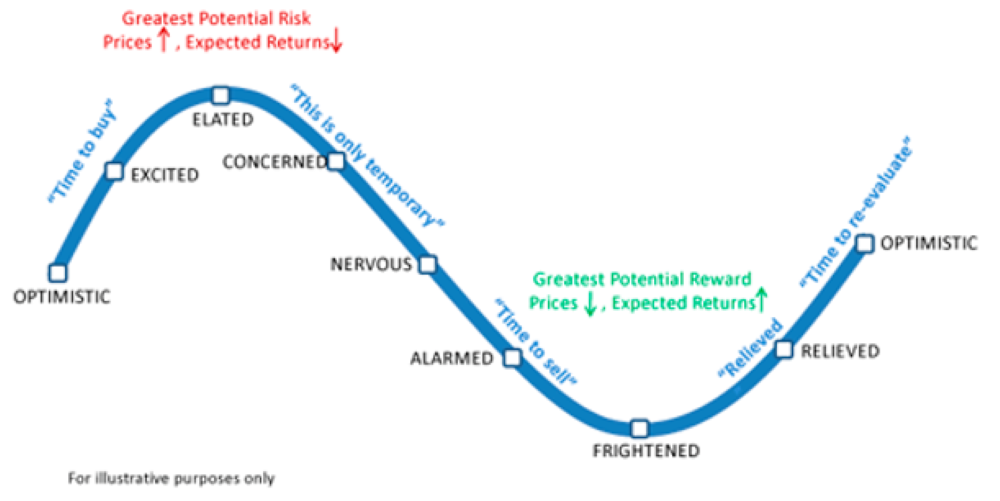
As has happened many times before, I am writing a quarterly letter as the market is experiencing large swings.  These swings increase emotion among investors and can create concern (click here for more on this in a piece we wrote around this same time in 2015).

Similar to what we mentioned in our last letter, some of the market moves are happening due to concerns about the possibility of rising interest rates.  We take this seriously, as rising rates may create stock and bond market headwinds.

We also strive to remain humble, however, about the long-term benefits of any short-term tactical moves that we contemplate, net of all taxes and expenses.  The reason why is that history continues to show that even the most accurate forecasters on Wall Street can be quite Fallible.

This doesn’t mean that we do not take into account differing opinions.

We review new research virtually every day from a multitude of sources, and evaluate and debate it in conjunction with our Research Roundtable and our greater network of industry colleagues.

As an example, we have been diving deeper into what the evidence says is the best way to position portfolios in rising rate environments.  One of the most robust papers we studied evaluated the relationship between inflation and 23 asset classes and strategies over the seventy-three year period from 1927-2000.

We wrote about this study recently in a piece we titled Inflation – What Should An Investor Do?

Here’s what the authors of the research paper found:

“The right mix of assets for growth and hedging purposes ultimately depends on an investor’s goals and needs. The good news is that most of the global assets we study have been able to outpace U.S. inflation over the long term. Hence, simply staying invested may by itself be an effective long-term solution to inflation concerns.”

Put another way…

The best long-term strategy to manage through inflationary periods is to stick to your long-term strategy.

Encouraging clients to stick to their long-term plans, yet again, reminds me of something that Jason Zweig of the Wall Street Journal wrote about his job back in 2013:

“My job is to write the exact same thing… in such a way that…  I am [not] repeating myself.”

Jason’s message is always the same and aligns with the quote below from the person whom many consider to be the father of modern security analysis, Benjamin Graham:

“The investor’s chief problem – and even his worst enemy – is likely to be himself.”

We have never met an investor who is totally immune to the problems associated with the Cycle of Market Emotions (professionals included), which is why we regularly repeat, even to ourselves, much of what we’ve said before.

In an effort to avoid overreacting to market swings or ever changing forecasts, we stay anchored on a process that is linked to goal oriented investment policy statements.

This strategy focuses us on rebalancing positions to stay in line with investment policies, which mandate that we buy after large drops if we find ourselves too far below allocation targets and trim positions after large market runs if we move too far ahead of targets.

I know that this might sound overly simplistic, but as Warren Buffett has said…

“Investing is simple, but not easy.”

Related to this, we’d love to say that, after the uneasiness we all felt surrounding the historic market drop in March of 2020, we were correctly forecasting the subsequent historic market rise when we started buying stocks and other risk assets in April 2020.

As I wrote in our Q1 and Q2 2020 letters, though, we were just following the evidence about historical market movements and sticking to our process.

We will certainly not get buys or trims right every time and we will make mistakes.

Going forward, though, we will continue to stay focused on what the evidence consistently says about the advantages of Simple Alternatives and recall the words of the late David Swensen, the long-time Chief Investment Officer of Yale:

 “Only extraordinary circumstances justify deviation from a simple strategy…”

_____________________________________________________________________


Related Reading:

Inflation – What Should An Investor Do?

The Simple Alternative

Preston McSwain
+ postsBio
  • Preston McSwain
    Better Ways to Invest in Bonds?
  • Preston McSwain
    The Difference Simple Alternatives Can Make – 15 for 15
  • Preston McSwain
    Emerging Markets – Is the Juice Worth the Squeeze?
  • Preston McSwain
    The Road Less Traveled – Simple Alternatives
  • Preston McSwain
    Beware of Sharpe Objects
  • Preston McSwain
    The Certain Drag on Performance – Taxes
  • Preston McSwain
    Will the Real Alphas Stand Up?
  • Preston McSwain
    Is Top Manager Performance A Random Walk?
  • Preston McSwain
    Questioning the Illiquidity Premium
  • Preston McSwain
    Staying Disciplined and Avoiding Unforced Errors
  • Preston McSwain
    Still Keeping A Steady Hand
  • Preston McSwain
    Smaller Is Better
  • Preston McSwain
    Recessions – What Should Investors Do?
  • Preston McSwain
    What To Do About Inversions
  • Preston McSwain
    The Normal Steady Hand
  • Preston McSwain
    Solutions to Increase Trust – Simple But No Simpler
  • Preston McSwain
    Perspectives of a Trillion Dollar Investor – Our Conversation with Richard Ennis
  • Preston McSwain
    Trillions – Our Talk With Robin Wigglesworth About Index Funds
  • Preston McSwain
    Should We Be Tactical?
  • Preston McSwain
    It’s All Greek to Me
  • Preston McSwain
    Stats About Statistics
  • Preston McSwain
    Inflation – What Should An Investor Do?
  • Preston McSwain
    Waving Banners – Have Some ESG Managers Lost Their Way?
  • Preston McSwain
    Do The Kingmakers Have Clothes?
  • Preston McSwain
    Private Investment Questions and Issues to Consider
  • Preston McSwain
    Is Smart Beta Smart?
  • Preston McSwain
    The Simple Alternative
  • Preston McSwain
    Don’t Get Sacked – Super Bowl Version LV
  • Preston McSwain
    How to Actively Add Value
  • Preston McSwain
    What Needs to Change?
  • Preston McSwain
    Don’t Put Yourself in a Corner
  • Preston McSwain
    Trillions of Influence
  • Preston McSwain
    What Should Investors Do?
  • Preston McSwain
    Do You Need to Join the Endowment Club?
  • Preston McSwain
    Don’t Get Sacked – Super Bowl Version LIV
  • Preston McSwain
    Relative Alpha®
  • Preston McSwain
    Bungled Benchmarking
  • Preston McSwain
    Do Index Funds Make Active Funds Better?
  • Preston McSwain
    The Triumph of Hope Over Experience?
  • Preston McSwain
    Fallible Forecasts?
  • Preston McSwain
    Cash Flow – Nothing More
  • Preston McSwain
    Every Year Can Not Be Good
  • Preston McSwain
    Are We Baking Portfolios with Bad Ingredients?
  • Preston McSwain
    Private Equity Access: Do We Need More or Should We Beware?
  • Preston McSwain
    21 Tips On How To Evaluate An Investment Adviser
  • Preston McSwain
    Outperformance in Down Markets 100% of the Time?
  • Preston McSwain
    Holiday Colors
  • Preston McSwain
    Private Persistence That Just Ain’t So?
  • Preston McSwain
    The Good Lehman Brothers Story
  • Preston McSwain
    Who Is Passive?
  • Preston McSwain
    What Is Active?
  • Preston McSwain
    Why We Don’t Make Forecasts
  • Preston McSwain
    The Normal
  • Preston McSwain
    You Can Keep It Simple
  • Preston McSwain
    Where Are Fees and Expenses Not Costs?
  • Preston McSwain
    Private Presentations: Are Some Tall Tales?
  • Preston McSwain
    How Trustees Can Be Prudently Passive
  • Preston McSwain
    Ignoring Fees Doesn’t Beat the Market
  • Preston McSwain
    Trust and Fiduciary Services: Questions to Consider
  • Preston McSwain
    How to Do Better When Investing for Trusts and UHNW Individuals?
  • Preston McSwain
    How Should You Invest Now?
  • Preston McSwain
    What Should Investors Do Now About…. ?
  • Preston McSwain
    Why Do Warren’s Words Carry Weight?
  • Preston McSwain
    Can I Do Better?
  • Preston McSwain
    Chicken Fried & Cold Beer On A Friday Night
  • Preston McSwain
    Don’t Let Your Portfolio Get Sacked
  • Preston McSwain
    Our Daily Groundhog Day?
  • Preston McSwain
    Talking Heads
  • Preston McSwain
    Your Brain On The Market
  • Preston McSwain
    Absolute Value and Transparency
  • Preston McSwain
    What’s In A Name?
  • Preston McSwain
    Are Hedge Funds Prudent for Taxable Investors?
  • Preston McSwain
    Keep A Steady Hand On The Tiller
  • Preston McSwain
    Pavlov’s Brokers?
  • Preston McSwain
    Is Bad For Business Sometimes Good?
  • Preston McSwain
    Say It Ain’t So, Joe
  • Preston McSwain
    Rock Science
  • Preston McSwain
    Don’t Be A Sheep
  • Preston McSwain
    No Crystal Balls – Just Peace Of Mind
  • Preston McSwain
    What Would Yale Do If It Was Taxable?
  • Preston McSwain
    Say It Ain’t So, Joe
  • Preston McSwain
    Is Trying to Pick Active Managers a Loser’s Game?
  • Preston McSwain
    If We Had A Chief Economist We Would Have to Pay Them
  • Preston McSwain
    Fiduciary Wealth Partners Reading List
  • Preston McSwain
    Transparency, Simplicity and Peace of Mind®
SHARE
Tags:
Investing, Transparency, Wealth Management
RELATED ARTICLES
The Difference Simple Alternatives Can Make – 15 for 15
Simple portfolios consistently outperform the complex.
The Road Less Traveled – Simple Alternatives
A different type of edge – a simple investment alternative.
Are Most Investment Managers One Hit Wonders?
As someone who is about to continue my studies in the hopes of having a rewarding job in Finance, the data is unsettling.
All articles

Follow us on social media

Search Our Ideas

Subscribe to Our Posts


Important disclosures

Most Popular

  • Questioning the Illiquidity Premium
  • Say It Ain’t So, Joe
  • The Simple Alternative
  • Crucial Elements in Wealth Management: Simplicity and Transparency
  • Are We Baking Portfolios with Bad Ingredients?

Browse by Theme

  • Fees
  • Fiduciary Duty
  • Investment Philosophy
  • Managing The Market
  • Peace of Mind
  • Performance Measurement
  • Private Investing
  • Quarterly Letter
  • Simplicity
  • Taxes
  • Transparency
  • Uncategorized
  • Values

FWP Logo Dark

Fiduciary Wealth Partners is a 100% employee owned firm that serves clients in a transparent, fiduciary manner.

We do not have any fee sharing arrangements with managers and do not have any broker-dealer conflicts. In addition, you will never see an arbitration clause in our contracts.

Everything we do is focused on assisting trustees, institutions and families with investment consulting, management and overall asset planning strategies.

  • Disclosures
  • ADV
  • Privacy Policy
  • Form CRS

Useful Links

  • Investment Advisory Services
  • Wealth Counseling
  • Our Team
  • Research Roundtable
  • Our Values
  • Questions To Consider
  • Insights and Ideas
  • Contact Us

Contact us

Phone

(617) 602-1900

Email

info@fwpwealth.com

Address

2310 Washington Street
3rd Floor
Newton, MA 02462


View larger map

© 2020 FWP. All Rights Reserved. Fiduciary Wealth Partners Is An SEC Registered Investment Adviser.